
How 100+ students moved from using AI to building with it
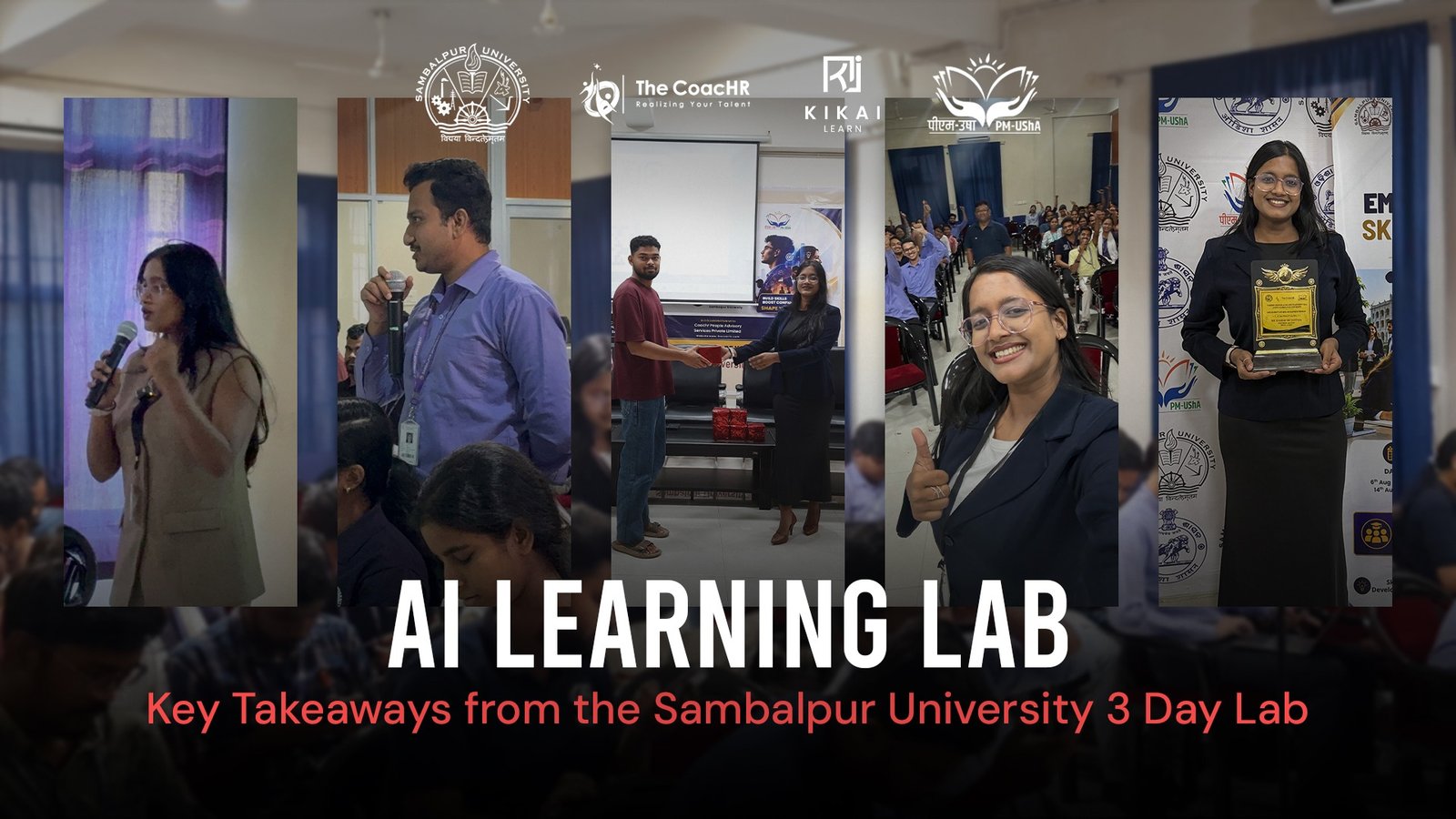
TLDR: Recently Kikai Learn Conducted a Workshop called AI Learning Lab and more than hundred Students participate in the hands-on No-Code AI Learning Lab at Sambalpur University.
Key Takeaways, because we love outcome driven activities!
• 100+ students participated in the wider learning experience.
All of the students walked away with their Eresumes, 67% of the students created their own portfolio websites during the workshop
• 40% of participating students took part in the live no-code AI agent activity.
• Students explored 10+ AI tools across practical learning modules.
• The curriculum covered prompt engineering, AI productivity, personal branding, market positioning, product marketing, e-resumes, workplace productivity and no-code AI agents.
• The programme combined AI learning with employability-focused skills such as communication, confidence, problem-solving and adaptability.
• Student projects and participation were recognised
Hear what our participants have to say about this, we have curated a small video
What We Did, What They Built, and the Tea We Shared Along the Way
Inside the No-Code AI Learning Lab at Sambalpur University
What happens when students are no longer taught about AI but are instead given the opportunity to work with it?
The question was addressed at Sambalpur University, since a two-day No-Code AI Learning Lab had turned the classroom into a place where students could carry out experimentation, problem-solving and building.
The students looked into prompt engineering, AI productivity, personal branding, market positioning and product marketing before proceeding to the most hands-on aspect of the experience: developing their own AI agents without having to write any code.
The programme, which was supported by the PM-USHA initiative of the Government of India and organised by the Career Counselling & Placement Cell (CCPC) at Sambalpur University in partnership with Coach HR, did not simply introduce students to new AI tools; instead it concentrated on the situation that arises when learners are encouraged to ask questions, test their ideas, solve real-time problems and turn what they have learned into something that they can actually use.
The experience, which began with first-time use of no-code AI and included one-to-one feedback, student recognition, and a change from using AI for assignments to considering it as a tool for building solutions, provided a glimpse of what future-ready learning might look like.
It is the account of the events that took place in that classroom, of what the students constructed and of what they learned, and also of the reason why experiences of this kind could influence the way AI is taught with a view to employability.
From Learning About AI to Building With AI
For many students, AI can initially feel highly technical. The lab approached the subject from a different direction. Instead of beginning with programming, students were encouraged to begin with a problem: What can be improved, automated, created or communicated with AI?
Across the two-day AI component, the sessions combined demonstrations, questions, experimentation and feedback.
Students explored AI awareness, prompt engineering, AI-powered productivity, no-code AI agents and workflows, product marketing, personal branding, market positioning, e-resumes, workplace productivity, interview communication and real-time problem-solving. The broader source material also records exposure to 10+ AI tools across these modules
The sequencing mattered. A question led to a demonstration. The demonstration led to experimentation. The experimentation created another question. That loop made the classroom participatory and helped move students from simply consuming information to actively testing what AI could do.
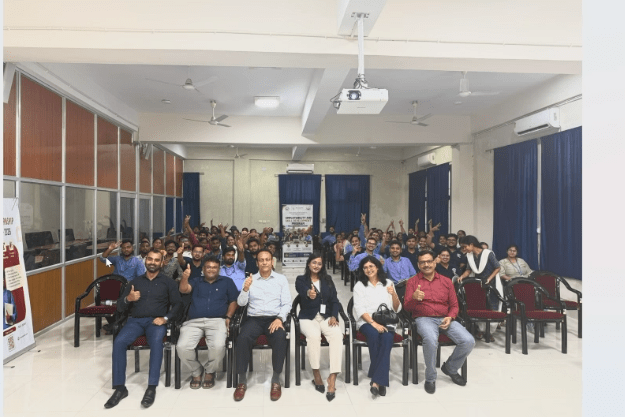
100+ Students, One Practical Learning Environment
More than 100 students were part of the programme.
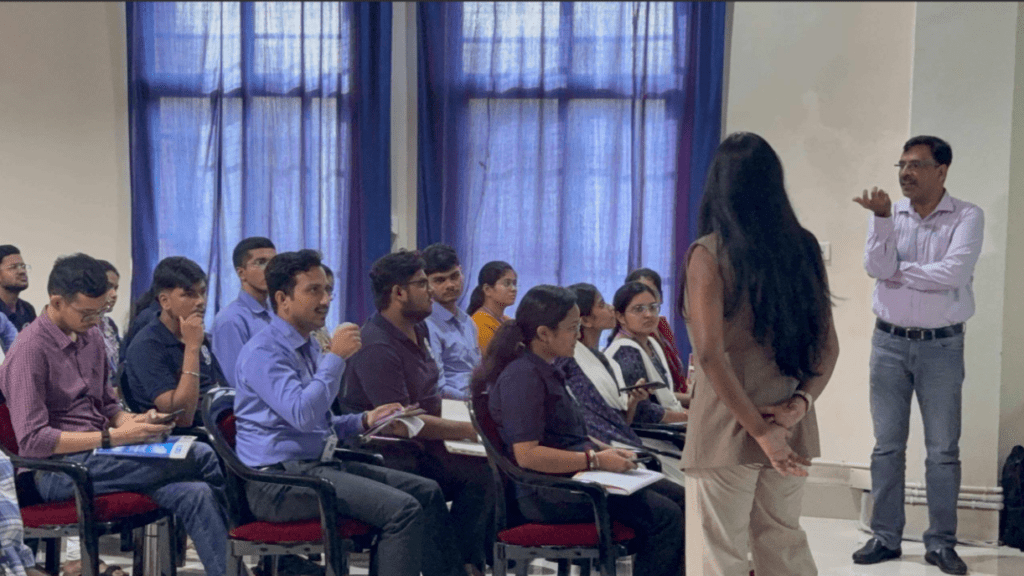
Students asked questions, tried tools, responded to real-time situations and received ongoing feedback. The experience also included one-to-one interaction.
Student reflections highlighted the value of feedback and active participation. They also spoke about the confidence that came from trying something, receiving guidance and improving it.
The programme connected technical learning with skills such as communication, confidence, adaptability and problem-solving.
40% of participating students created their own agents in the live no-code AI agent activity.
The Moment AI Became Something Students Could Build
The clearest shift in the room was not simply that students learned new AI tools. It was the change in how they viewed AI.
Students who had previously used AI mainly for assignments, information gathering or basic productivity were introduced to a different possibility: AI could also become something they could design around a real need.
The live agent activity gave that idea a tangible form. According to the programme material, 40% of participating students built and ran a live no-code AI agent during the programme.
Student work and participation were also recognised during the prize distribution, giving the learning experience a visible outcome and a meaningful close.

Why No-Code AI Matters for Employability
The employability question is becoming more practical. It is not only about whether a graduate has heard of AI. It is whether that graduate can learn a new tool quickly, communicate with it effectively, identify a useful application and turn a problem into a workable solution.
No-code AI can make that first step more approachable by reducing the technical barrier to experimentation.
Students from different academic backgrounds can begin exploring AI-enabled workflows without needing to start as programmers. That makes hands-on practice possible while keeping the focus on problem-solving and outcomes.
For an employability-focused programme, that distinction matters. Students are not only preparing to use technology at work. They are learning to adapt as the technology itself keeps changing.
What Students Learned From The Experience
Student reflections added a further dimension to the program.
Participants stressed the importance of one-to-one interaction, ongoing feedback and active participation.
They also identified exposure to AI tools, prompt engineering, personal branding, market positioning and No-Code AI agents as meaningful parts of their learning.
In one important respect the experience differed from a typical classroom session.
Students were encouraged to attempt.
They could try things, get feedback, respond to things happening in real time, and improve their approach.”
That human element became a key part of the learning experience. Technology was the means. Through guided participation students gained confidence in using them.
Hear directly from the learning experience:
Kikai Learn’s Role in the Learning Lab
Kikai Learn delivered the practical AI learning component with a focus on making AI accessible.
The goal was not to simply give students a list of tools. Students were guided through exploration, application and real-world use cases.
The learning process was simple:
Understand the problem.
Communicate with AI.
Experiment with the right tools.
Build a practical solution.
Learn from feedback.
This approach turned the lab into a hands-on learning experience.
What the Program Leaves Behind
The real measure of an AI learning programme is what students feel confident enough to do after the session. Can they look at a problem and ask whether AI can help? Can they communicate clearly with an AI tool? Can they build a useful workflow or agent? Can they keep learning when the tools change?
The Sambalpur University learning lab offered students a starting point for answering those questions through practice. The experience connected AI education with employability, creativity and confidence, while giving students an opportunity to move from using AI to thinking about what they could build with it.
The bigger lesson is straightforward: AI education becomes more meaningful when students are given the space to experiment. A classroom can explain what an AI agent is. A hands-on lab can let a student build one.
Participants were asked to prepare their own AI agent / AI avatars and 45% submitted their own ai agents
A Note of Thanks
We extend our sincere gratitude to the Career Counselling & Placement Cell (CCPC), Sambalpur University, for creating a platform that allows students to explore emerging technologies through hands-on learning. We are equally grateful for the support provided through PM-USHA, which made this broader employability-focused initiative possible.
A special thank you to the mentors, faculty members, contributors and everyone who supported the programme behind the scenes. Most importantly, thank you to the students of Sambalpur University who showed up with curiosity, asked questions, participated actively and were willing to experiment with something new.
Their enthusiasm was what turned the learning lab from a workshop into a genuine learning experience.
Organized by CCPC, Sambalpur University, and funded by PM-USHA, the No-Code AI Learning Lab was a step toward making future-ready skills more practical, accessible and connected to the realities students will face in the workplace.
Want to bring practical AI learning to your students, team or organisation?
Frequently Asked Questions
What was the No-Code AI Learning Lab at Sambalpur University?
It was a hands-on AI learning experience delivered as the practical AI component of an 8-day Employability & Skill Development Programme. The two-day AI component focused on practical applications of AI and no-code building.
Who organised the programme?
The programme was organised through the Career Counselling & Placement Cell (CCPC), Sambalpur University, with Kikai Learn contributing the practical No-Code AI learning component.
Was the programme funded under PM-USHA?
Yes. The programme was conducted under PM-USHA, the Pradhan Mantri Uchchatar Shiksha Abhiyan initiative.
How many students participated?
More than 100 students were part of the programme. The source material records that 40% of participating students took part in the live no-code AI agent activity.
What did students learn?
Students explored AI awareness, prompt engineering, AI-powered productivity, no-code AI agents and workflows, product marketing, personal branding, market positioning, e-resumes, workplace productivity, real-time problem-solving and interview communication.
Why is No-Code AI useful for students?
It lowers the barrier to experimentation, allowing students from different academic backgrounds to explore practical AI applications and build useful workflows without needing extensive programming knowledge.
Bringing Practical AI Learning to More Students
The Sambalpur University experience reminded us of something simple: students learn best when they get the chance to try things for themselves.
Giving them the tools is only the first step. The real learning happens when they ask questions, experiment, make mistakes and build something they can actually use.
We’re grateful to Sambalpur University and the Career Counselling & Placement Cell for giving us the opportunity to be part of this initiative.
At KiKai Learn, we hope to take more practical AI learning experiences to students and help them build skills they can carry into the real world.