AI-Driven Growth with Empathy at the Core: Key Reflections from Manthan 6.0
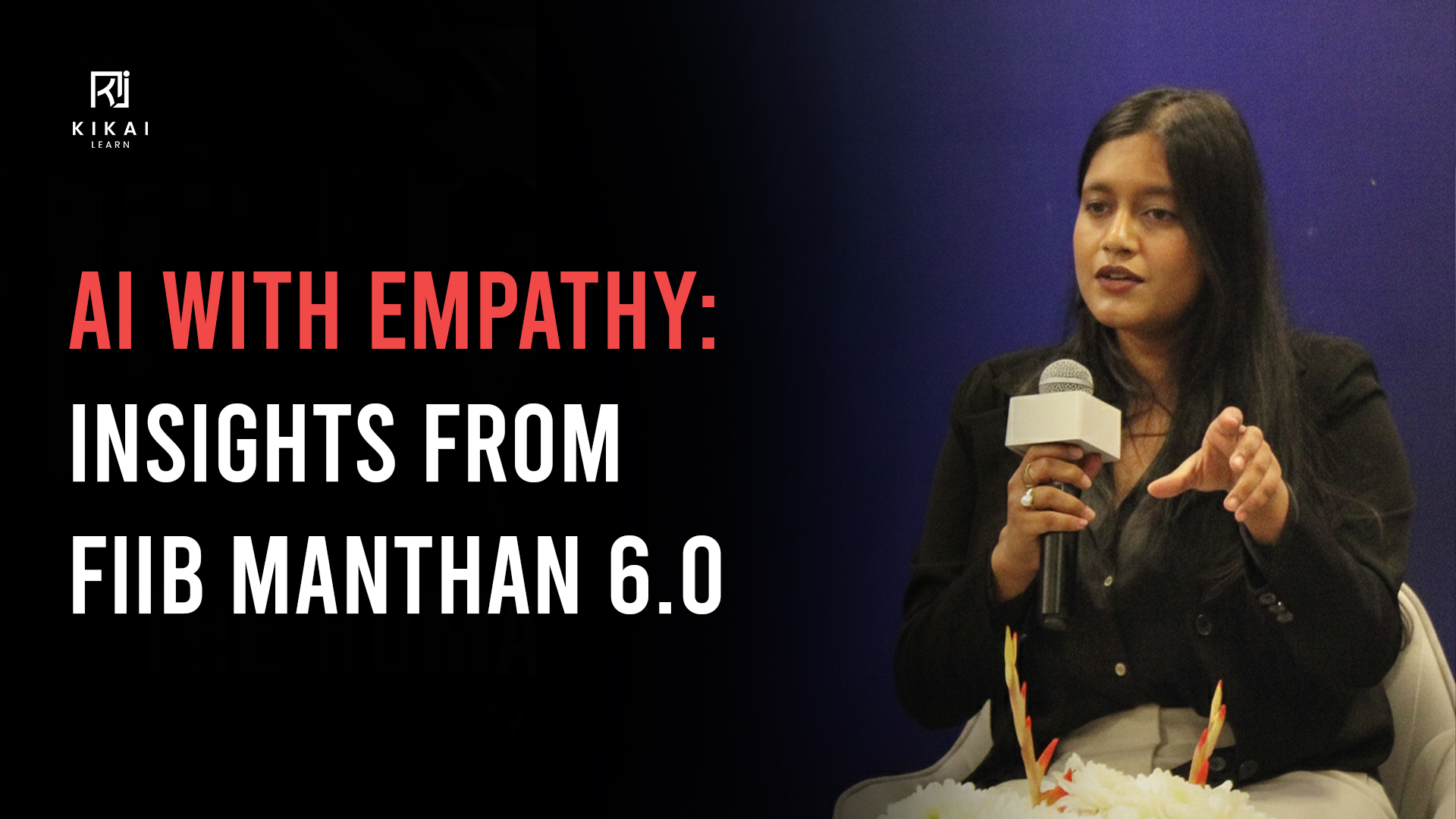
This powerful question anchored the dialogue at Manthan 6.0, a flagship thought-leadership forum hosted by the Fortune Institute of International Business (FIIB). Centred around the theme “AI-Driven Growth & New Work Models: Innovating with Empathy,” the session brought together senior industry leaders, innovators, and HR practitioners to examine how organisations can adopt AI responsibly , not as a substitute for human talent, but as a catalyst for human-led growth.
Among the panelists was Rashmi Shrivastava, Founder of Kikai Learn, a leading female voice at the intersection of marketing, artificial intelligence, and education. She shared compelling insights on how AI, when designed and deployed with intent, can elevate human creativity, decision-making, and learning outcomes. Her perspective reinforced a critical truth: technology should empower people, not replace them, a principle that lies at the heart of sustainable, future-ready organisations.
A Panel That Bridged Technology, Leadership, and People
The discussion featured a diverse and impactful panel:
Rashmi Shrivastava, Founder, Kikai Learn
Varun Arora, Founder, Myschf
Paras Arora, HR, Phronesis Partners & Fuld & Co.
Emmy Anita Gilbert, Sr. AVP – HRBP, EXL Service
Dr. Shuchi Dikshit, Moderator
Together, the panel offered a multidimensional view of how AI is shaping organisations, not just operationally, but culturally and emotionally.
AI Is Fast: Context Makes It Powerful
One of the strongest takeaways from the discussion was that AI without context is incomplete. While AI can process information at scale and speed, its effectiveness depends on human judgment, knowing when to use it, how to guide it, and where human insight must intervene.
AI literacy, therefore, is no longer optional. It has become a core workplace capability, essential for making informed, ethical, and responsible decisions.
Empathy as a Capability, Not a Soft Ideal
A compelling insight that resonated across the audience was the idea that empathy is now measurable and trainable. In the age of intelligent systems, empathy is not a “soft” skill , it is a strategic one.
High-performing systems and individuals may drive output, but great leadership is built on understanding people, intent, and impact. The panel highlighted that while AI can enhance performance, it cannot replace emotional intelligence, trust-building, or ethical reasoning.
The Human Role in an AI-Shaped Workplace
The discussion made it clear that AI is already reshaping workflows, from decision-making to execution, and preparedness is key. However, creativity, imagination, and leadership continue to originate from human experience.
Technology can accelerate outcomes, but original thinking, empathy-driven leadership, and cultural stewardship remain deeply human responsibilities. Human intervention is not a bottleneck, it is the differentiator.
Moving Forward with Responsible Innovation
Manthan 6.0 served as a powerful reminder that the future of work is not a choice between humans and machines. It is about designing systems where intelligence and empathy coexist.
As organisations move toward more intelligent workplaces, the leaders who will succeed are those who recognise that empathy keeps technology grounded, and keeps growth sustainable.


Saniya Mahajan